
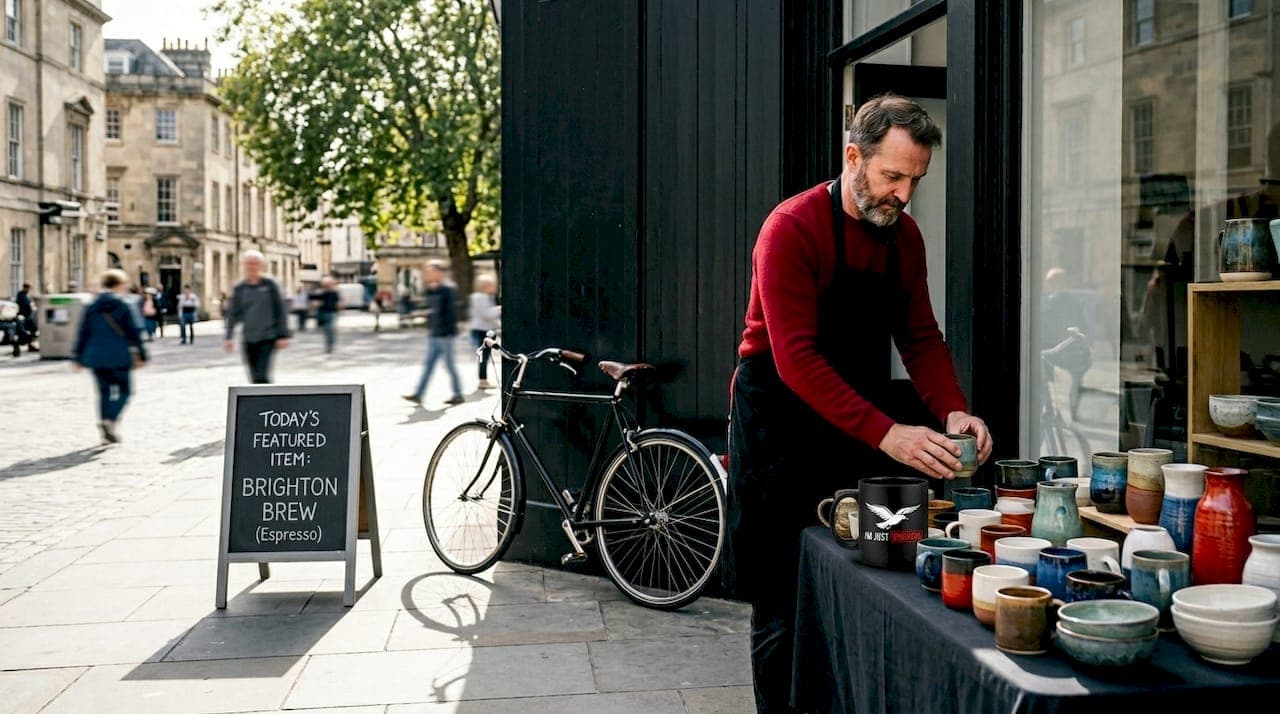
Walk through any city worth caring about and you will notice something: the places that feel alive are almost always defined by the shops, cafés, studios, and markets run by people who actually live there. Understanding how local businesses shape city culture goes far beyond nostalgia or a preference for the independent over the corporate. There is a measurable, evidence-backed case for why local commerce determines whether a neighbourhood has genuine character or merely the appearance of one. This article unpacks the economic, social, and political mechanisms behind that influence, and offers practical tools for residents and community activists who want to do something about it.
Table of Contents
- Key takeaways
- How local businesses shape city culture through economics
- The social mechanisms behind local identity
- Challenges and enablers for lasting cultural influence
- Practical steps for residents and community activists
- My perspective on what actually matters
- Discover Brighton's local business stories
- FAQ
Key takeaways
| Point | Details |
|---|---|
| Local multiplier effect matters | Money spent locally recirculates through wages and services, strengthening community infrastructure far more than spending at chains. |
| Embeddedness drives cultural impact | Businesses whose founders are socially integrated into their community create far stronger cultural identity than those that simply trade there. |
| Operational permanence is the real test | A business that survives long enough to host regular events and build routines shapes culture. Opening day means nothing without staying power. |
| Policy reduces or creates barriers | Municipal actions such as streamlined permitting and fee waivers directly affect whether culturally significant businesses survive. |
| Residents can advocate with data | Effective community activism relies on local spend data and transparent assumptions, not slogans. |
How local businesses shape city culture through economics
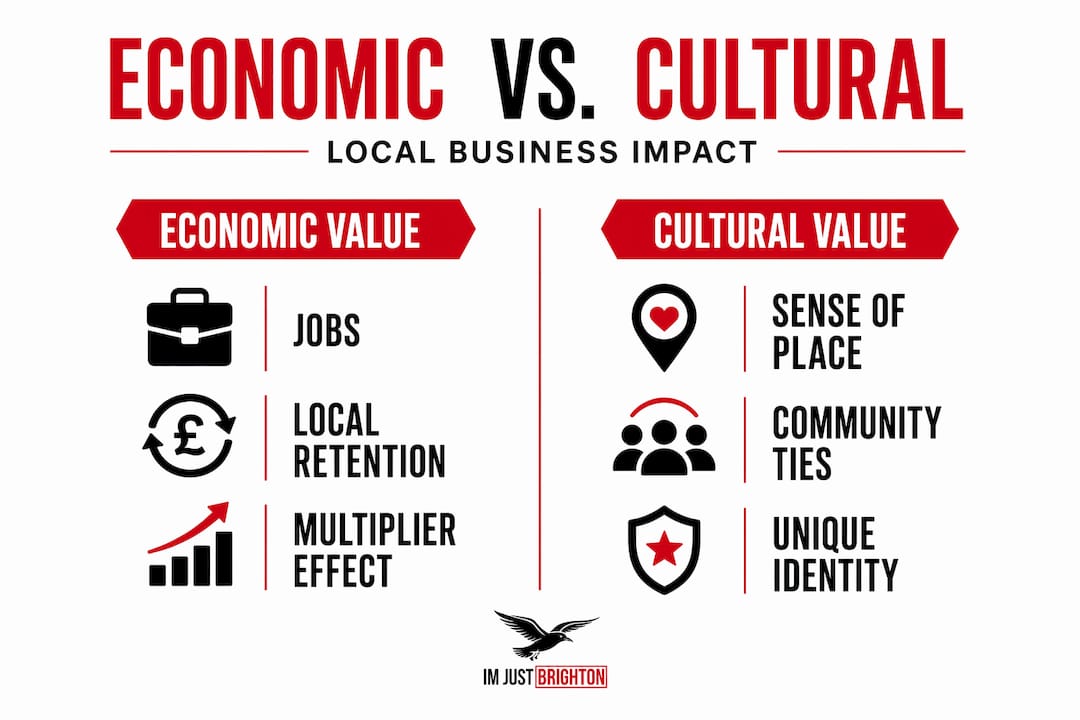
The economic case for supporting local businesses is real, but it is also frequently misrepresented. The concept at the heart of it is the local multiplier effect: the idea that money spent at a local business circulates through the community multiple times before leaving, paying local wages, buying from local suppliers, and funding local services. The local multiplier effect works by retaining wages, jobs, and services within the community rather than sending profit to a distant head office.
What most advocates get wrong is treating the multiplier as a fixed number. In reality, multipliers vary widely by sector, geography, and the assumptions built into the methodology. A local restaurant that sources ingredients from nearby farms will retain far more spending locally than a local retailer that imports all its stock. This distinction matters enormously when you are making the case to a council or a planning committee.
The scale of small business in the economy gives context to why this matters. Over 36 million small businesses in the US alone employ nearly half the private sector workforce. Closer to home, the pattern holds across British cities: the majority of businesses operating in any given high street are small, and firms under 50 employees employ 44% of workers while simultaneously generating belonging and place attachment.
The table below illustrates how different types of local spending compare in terms of local economic retention.
| Spend type | Typical local retention | Cultural contribution |
|---|---|---|
| Local food and hospitality | High: suppliers, staff, and premises are often local | Strong: gathering spaces, seasonal menus, local identity |
| Independent retail | Medium: stock may be imported, but wages and rates stay local | Moderate: curation reflects local taste and values |
| Local services (tradespeople, studios) | Very high: labour and materials often sourced nearby | High: skills, craft knowledge, and community networks |
| Chain retail or hospitality | Low: profit extracted from community | Weak: standardised experience with no local character |
Pro Tip: When advocating for local business support, always ask which assumptions underpin any multiplier figure you cite. A credible, conservative estimate will persuade decision-makers far more effectively than an inflated claim that can be easily challenged.
The social mechanisms behind local identity
Economics alone does not explain why losing a particular bookshop or bakery can feel like a genuine bereavement for a neighbourhood. The deeper explanation lies in what researchers call sense of place. Studies show that sense of place mediates how local perceptions translate into behavioural engagement, meaning that when people feel genuinely connected to a place, they participate in it, defend it, and invest in it emotionally and financially.
Local businesses are one of the primary mechanisms through which that sense of place is built and maintained. A café that hosts poetry nights, a hardware shop whose owner knows every regular customer by name, a studio that runs community craft workshops: these are not peripheral activities. They are the substance of what makes a neighbourhood feel like it belongs to the people who live there.
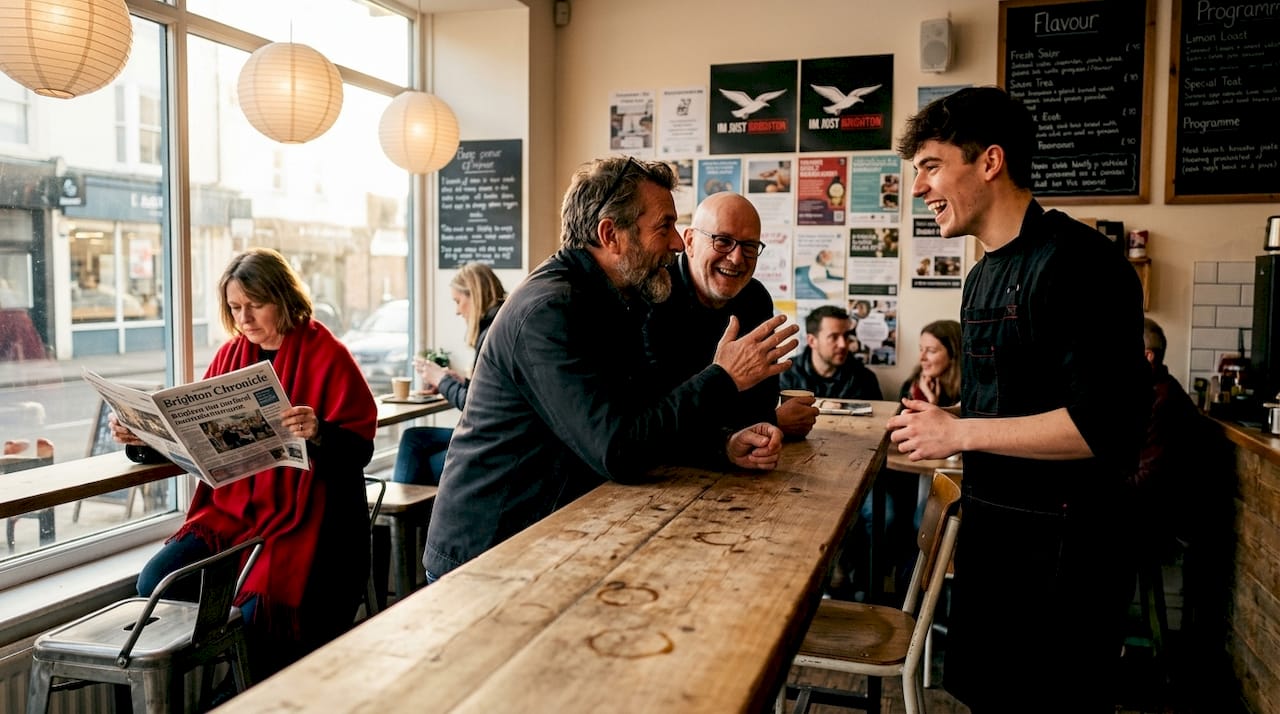
The academic concept of "embeddedness" is worth understanding here. Research into entrepreneurial embeddedness shows that businesses whose founders are socially integrated into their community, through local networks, shared cultural ties, and supplier relationships, actively create safe spaces for dialogue, reduce social fragmentation, and preserve local identity in ways that transient or externally owned businesses simply cannot replicate.
Here are the key social and cultural roles that locally embedded businesses play in community vitality:
- Gathering spaces. Pubs, cafés, and markets provide neutral ground where residents from different backgrounds interact, reducing social isolation.
- Cultural programming. Events, exhibitions, and workshops hosted by local businesses create regular touchpoints for community engagement.
- Skill and craft preservation. Artisan businesses pass on practical knowledge that would otherwise disappear from a community.
- Local narrative. Independent businesses tell the story of a place through their aesthetic, their stock, and their history, something no chain can manufacture.
- Social trust. Regular, repeated transactions between residents and local business owners build the kind of low-level social trust that holds neighbourhoods together.
Pro Tip: When assessing whether a business genuinely contributes to local culture, look beyond its product. Ask whether its founder lives locally, whether it sources from other local businesses, and whether it actively creates space for community interaction. Those factors predict cultural impact far better than size or age.
Challenges and enablers for lasting cultural influence
A business that opens with great fanfare and closes within eighteen months contributes almost nothing to city culture. Operational permanence and regular programming are more critical for cultural influence than any opening-day success. This is where policy and municipal support become directly relevant to cultural outcomes, not just economic ones.
The barriers that kill culturally significant businesses are often mundane: complex licensing requirements, high permit fees, slow planning decisions, and a lack of guidance for first-time business owners navigating local regulation. These are not insurmountable problems. They are choices that local governments make, and they can be unmade.
San Francisco's approach offers a concrete model. The city's Permit Centre provides personalised guidance to small businesses, and its regulatory reforms have benefited more than 7,000 projects. The result is not just economic efficiency. It is a more diverse, more stable local business environment that has a genuine chance of shaping culture over time.
Effective municipal support for local business culture includes the following actions:
- Establish a single-point permitting service. Reducing the number of departments a business owner must navigate dramatically increases survival rates in the critical first two years.
- Introduce fee waivers or reductions for independent businesses. Licensing costs that are trivial for a chain can be fatal for a sole trader.
- Create mentorship and navigation programmes. Pairing new business owners with experienced local operators transfers knowledge that no website or leaflet can replicate.
- Provide affordable, flexible commercial space. Rent is the single largest threat to independent business survival in most British cities.
- Measure cultural outcomes, not just economic ones. Councils that track only employment figures miss the social value of businesses that host events, build networks, and preserve local identity.
The contrast with one-off marketing campaigns is stark. "Shop local" campaigns without structural support are well-meaning but ineffective. They change behaviour temporarily without addressing the operational friction that closes businesses permanently.
Practical steps for residents and community activists
Understanding the mechanisms is one thing. Knowing what to do with that understanding is another. If you are a resident or community activist who wants to strengthen the cultural role of local businesses in your area, here is where to focus your energy.
Start with data. Vague claims about local spending do not move councils or planning committees. Methodologically sound multiplier estimates with explicit assumptions carry far more weight. Work with local business improvement districts or universities to gather credible figures specific to your area.
Then look at embeddedness. Not every independent business contributes equally to community culture. The ones that matter most are those whose owners are genuinely integrated into local social networks, who source locally, who employ locally, and who create space for community interaction. Supporting those businesses specifically, rather than simply preferring anything that is not a chain, is a more targeted and effective approach.
Practical steps for individuals and community groups include:
- Map the locally embedded businesses in your area. Identify which ones host events, source locally, and employ residents. These are your cultural anchors.
- Engage with local planning consultations. Decisions about commercial space, licensing hours, and permitted uses directly affect which businesses can survive.
- Collaborate with local government. Frame arguments in terms of cultural infrastructure and social cohesion, not just economics. Councils respond to both.
- Use platforms that amplify local voices. Media coverage of local business impact builds the public support that makes policy change possible.
- Share stories, not just statistics. Residents respond to narrative. Document the cultural contributions of local businesses through photography, social media, and community events.
Place attachment varies significantly across different stakeholder groups, which means your communication strategy needs to be tailored. What resonates with long-term residents may not resonate with newer arrivals or visitors, and effective advocacy accounts for that difference.
My perspective on what actually matters
I have spent years watching well-intentioned "support local" campaigns come and go without leaving much trace. What I have learned is that the conversation is almost always too shallow. People talk about local businesses as though the category is self-evidently virtuous, and that framing does real damage.
What I have seen actually work is specificity. Not "support local businesses" but "support this business, run by this person, who sources from these suppliers, and hosts these events." The cultural contributions of businesses that are genuinely embedded in their communities are qualitatively different from those that happen to be independently owned. That distinction is not academic. It changes which businesses deserve advocacy and which ones do not.
The other thing I have come to believe strongly is that operational friction is the enemy of culture. A brilliant independent venue that cannot navigate a licensing renewal, or a craft studio that closes because the lease doubled, takes years of community investment with it when it goes. Reducing that friction is unglamorous work. It does not generate the kind of social media engagement that a mural unveiling does. But it is far more consequential for the long-term cultural character of a city.
Local networks matter more than most people realise. The business-to-business relationships between local suppliers, venues, and service providers create a cultural ecosystem that is more resilient than any single business. When those networks are strong, the loss of one business is painful but survivable. When they are weak, every closure is potentially terminal for the broader cultural environment.
— Tim Cucarella
Discover Brighton's local business stories
At Imjustbrighton, we have been documenting exactly this kind of cultural impact since the platform launched. Brighton's independent businesses are not background scenery. They are the story. Through our community storytelling features, we work directly with local entrepreneurs, artists, and business owners to capture the cultural contributions that rarely make it into mainstream coverage.
If you run a local business or want to see yours featured, our collaboration packages are built specifically to connect businesses with the residents who care about them most. You can also submit your own story to the platform and contribute to the growing archive of authentic Brighton voices. Every story shared strengthens the case for the kind of city we want to live in.
FAQ
How do local businesses contribute to city culture?
Local businesses shape city culture by creating gathering spaces, preserving craft and local knowledge, and building social trust through repeated community interaction. Businesses whose founders are socially embedded in their community have the strongest and most lasting cultural impact.
What is the local multiplier effect?
The local multiplier effect describes how money spent at a local business recirculates through the community by paying local wages and buying from local suppliers. The actual multiplier varies by sector and geography, so specific local data produces more reliable estimates than national averages.
Why do some local businesses matter more culturally than others?
Cultural impact correlates strongly with embeddedness: whether the business owner lives locally, sources from nearby suppliers, employs residents, and actively creates space for community events. An independent business with no local ties contributes far less to city culture than a socially integrated one.
How can residents support the cultural role of local businesses?
Residents can map locally embedded businesses in their area, engage with planning consultations, use local media platforms to amplify business stories, and advocate for municipal policies that reduce operational barriers such as permit costs and licensing complexity.
What role does local government play in sustaining business culture?
Municipal policy directly affects whether culturally significant businesses survive long enough to shape their communities. Streamlined permitting, fee waivers, and affordable commercial space all increase operational permanence, which research identifies as the primary condition for lasting cultural influence.