
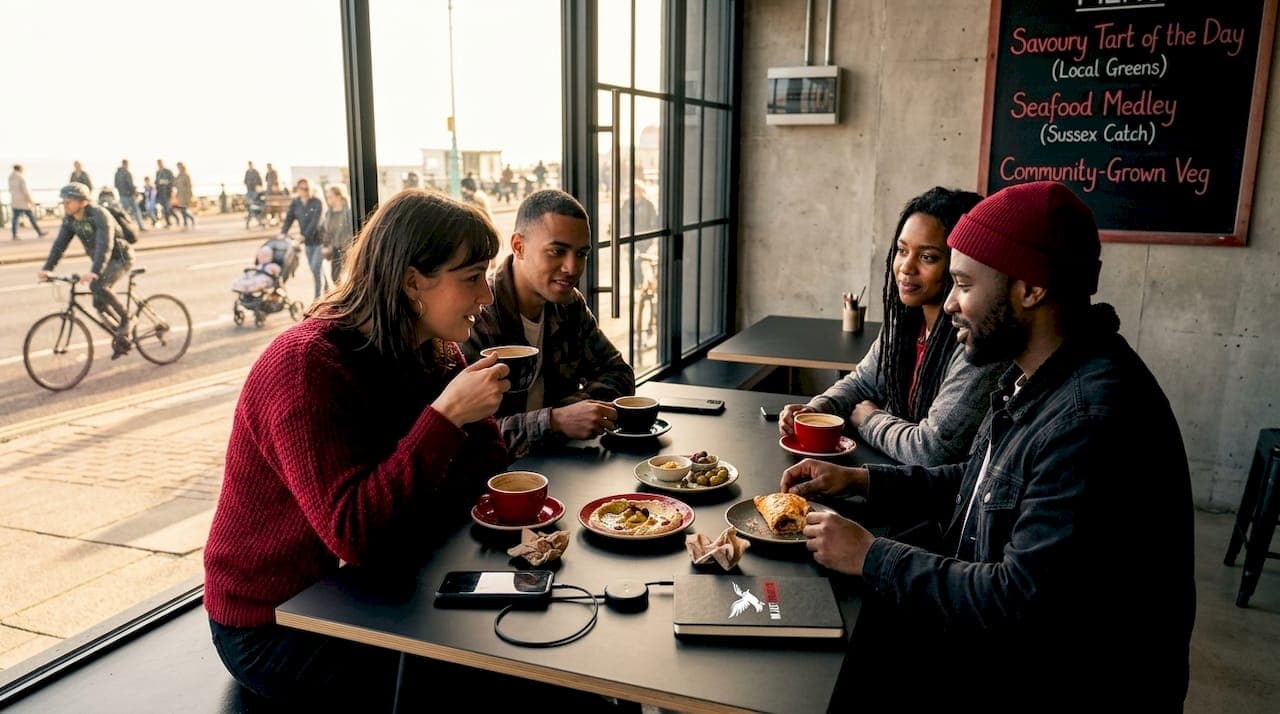
Brighton has one of the most exciting food scenes in the UK, but it is also one of the easiest to get wrong. If you want to eat where Brighton locals eat, you need to look past the seafront menus printed in six languages and the restaurants with someone stood outside waving you in. The real spots are quieter about themselves. They fill up because regulars tell friends, not because they paid for a billboard. This guide gives you the practical framework to find them, visit them correctly, and leave feeling like you actually experienced the city.
Table of Contents
- Key takeaways
- Before you eat where Brighton locals eat
- How to identify where locals actually eat
- Top local dining spots Brighton residents love
- Mistakes to avoid and how to verify your choice
- My honest take on Brighton's food scene
- Discover more with Imjustbrighton
- FAQ
Key takeaways
| Point | Details |
|---|---|
| Timing matters enormously | Walk-in-only spots like Moksha Caffè fill fast; plan your arrival well before last orders. |
| Seasonality signals authenticity | Menus that change with the seasons indicate a kitchen sourcing locally, not playing it safe. |
| Neighbourhood beats seafront | The most genuinely local dining in Brighton happens away from the tourist corridor. |
| Booking rules reveal the venue | Whether a place takes bookings or not tells you a great deal about who it is serving. |
| Verify before you visit | Cross-reference local guides, community platforms, and the venue's own booking policy before committing. |
Before you eat where Brighton locals eat
The single biggest mistake visitors make is treating Brighton like a city where you can just wander in anywhere and have a brilliant meal. You can, occasionally. But the locals who eat well here consistently do a small amount of preparation first, and it makes an enormous difference.
Understanding the booking culture
Brighton's dining scene splits fairly cleanly into two camps. There are neighbourhood restaurants that take bookings and expect you to honour them, and there are independent cafés and brunch spots that operate on walk-ins only. Neither model is better. They just serve different purposes and different times of day.
Moksha Caffè is the clearest example of the walk-in model done well. Open from 8am on weekdays and weekends, it takes no reservations whatsoever. Last food orders are taken an hour before closing, which means if you stroll in at 3:45pm expecting a full brunch, you will be disappointed. Locals know this. They arrive with enough time to settle in, and they do not rush.
At the other end, somewhere like The Ginger Pig requires you to book directly with the venue. It is a MICHELIN Guide listed modern British restaurant near the seafront, and turning up without a reservation on a Friday evening is not a strategy that works.
What neighbourhood to focus on
The seafront has its place, but the most consistent local dining in Brighton happens in the streets running north and west of the centre. Hove, the North Laine, and the areas around Seven Dials attract the kind of independent operators who are cooking for people who live nearby, not for people who are leaving on Sunday. That shift in audience changes everything about how a kitchen operates and what ends up on the plate.
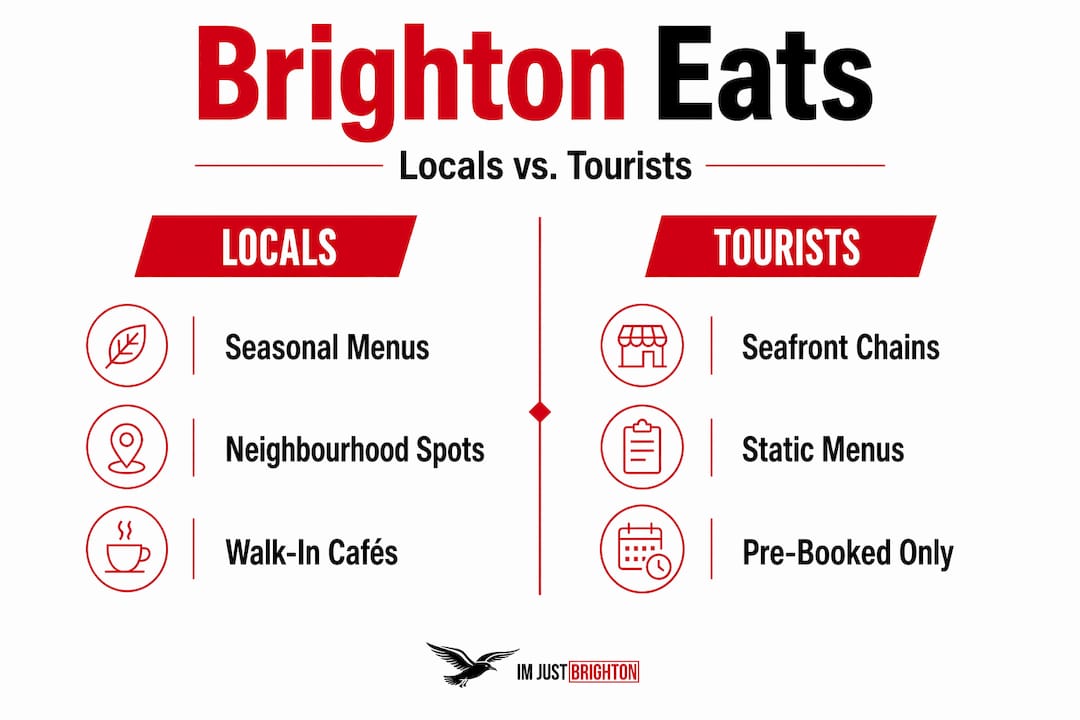
Pro Tip: If a restaurant's menu reads identically in January and July, that is a strong signal it is not sourcing locally. Genuinely local spots in Brighton change their menus with the seasons, and that consistency is what keeps regulars coming back.
| Consideration | What to look for |
|---|---|
| Booking policy | Walk-in only or direct booking; avoid third-party-only venues |
| Menu seasonality | Dishes that reflect the current season and local suppliers |
| Location | Neighbourhood streets over the main tourist corridor |
| Atmosphere | Regulars who clearly know the staff; unhurried pace |
How to identify where locals actually eat
Finding genuinely local restaurants in Brighton is less about having insider contacts and more about knowing what signals to read. Authentic local eating in Brighton involves reading operational models, menu seasonality, and atmosphere rather than just following online rankings.
Here is the process that actually works.
-
Start with neighbourhood-specific guides, not city-wide lists. A list of the best restaurants in Brighton will almost always skew towards well-funded PR operations. A neighbourhood guide, or a platform like Imjustbrighton that is rooted in community storytelling, surfaces the places that locals actually return to. Check the best restaurants in Brighton 2026 for a community-verified starting point.
-
Look at the MICHELIN Guide's neighbourhood picks, not just its starred restaurants. The MICHELIN Guide's spotlight on neighbourhood-centric restaurants in Brighton highlights venues valued by locals for their consistency and authentic approach to British cuisine. These are not always the flashiest options, but they are the ones with regulars.
-
Read the menu for sourcing language. Phrases like "from our local supplier" or named farms and fisheries are genuine signals. Generic descriptions of ingredients are not. A kitchen that names its suppliers is accountable to them, and that accountability produces better food.
-
Check the booking policy before you go. Walk-in policies and timing for last orders are good indicators of a venue's focus on serving a local clientele. A restaurant that only accepts walk-ins is structurally designed for regulars who can be flexible. One that takes advance bookings is planning for a different kind of guest.
-
Look at who is actually in the room. When you arrive, spend thirty seconds observing. Are people greeting the staff by name? Are there families with children on a Tuesday lunchtime? Are people reading the paper at the bar? These are the signals that tell you whether a place has a local community behind it or whether it is performing the idea of one.
Pro Tip: Local food bloggers who have been writing about Brighton for several years are far more reliable than aggregator sites. Their recommendations are based on repeated visits, not a single sponsored meal.
Top local dining spots Brighton residents love
These are not hidden gems in the sense that nobody knows about them. They are well-regarded. But they are loved by locals for specific reasons, and understanding those reasons helps you visit them correctly.
The Crazy Goose
The Crazy Goose sits near Brighton's seafront and delivers exactly what a neighbourhood pub restaurant should. The menu runs to pies, oysters on ice, hearty mains, and British classics with European influence. It suits a casual pint as easily as a long, unhurried lunch. That flexibility is precisely why locals return. It does not demand an occasion.
Moksha Caffè
Already mentioned for its walk-in policy, Moksha Caffè earns its reputation through the quality of its coffee and the care in its seasonal plates. Open daily from 8am, it is the kind of place where you can sit for an hour with a flat white and feel genuinely welcome. The no-reservations model keeps it feeling like a local café rather than a ticketed experience.
Wild Flor
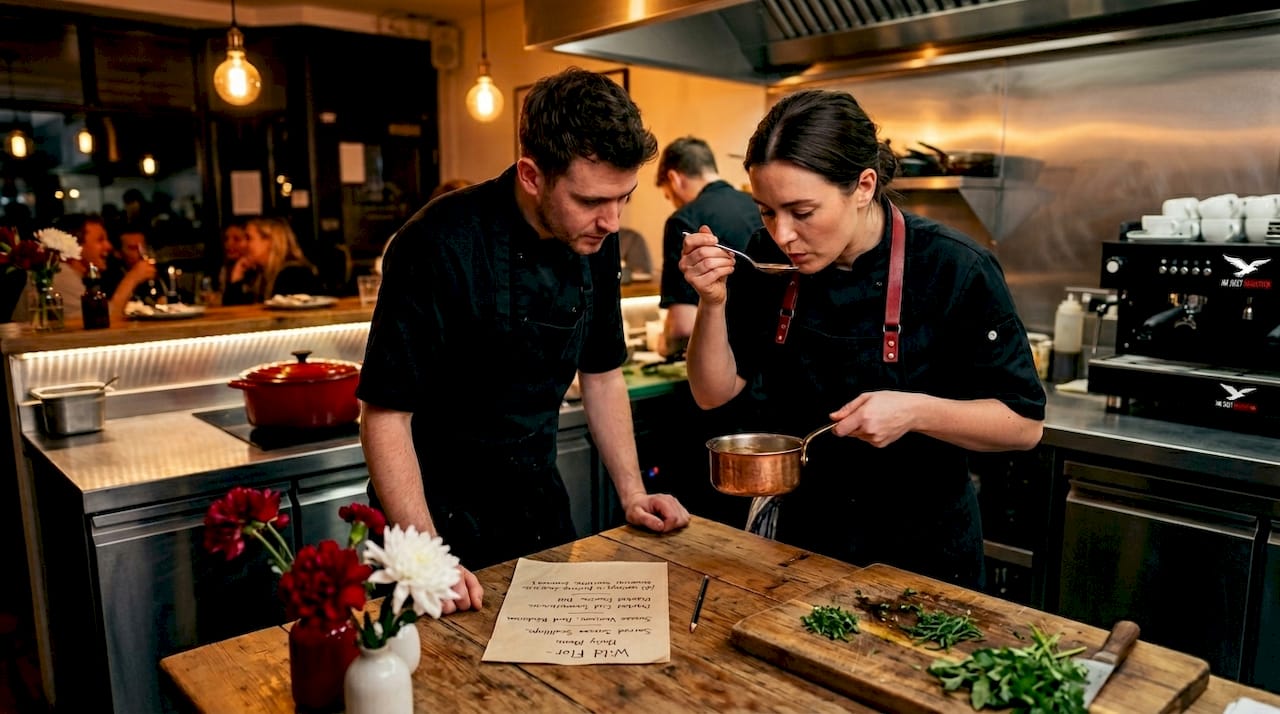
Wild Flor is a MICHELIN Guide listed neighbourhood restaurant run by lifelong friends. The menu changes seasonally, with dishes like goose rillettes with redcurrants appearing in winter. It prioritises local identity over tourist appeal in a way that is immediately apparent when you walk in. Neighbourhood restaurants with a consistent local identity provide the most authentic dining experiences in Brighton, and Wild Flor is the clearest proof of that principle.
The Ginger Pig
A MICHELIN Guide inspectors' favourite, The Ginger Pig carries the atmosphere of an early 20th-century inn with bespoke cocktails and modern British cooking. It sits in the ££ price category and requires a direct booking. The fact that it is not the easiest place to get into is part of why locals value it. It rewards planning.
The Salt Room
The Salt Room reopened in 2026 after a refurbishment, and it returned with a sea-facing terrace and a menu built around sustainably sourced local seafood. Oysters by the half-dozen, grilled fish to share, and plates designed for the table rather than the individual. It captures the relaxed seaside atmosphere without the tourist trap pricing.
| Venue | Cuisine | Atmosphere | Booking policy | Price range |
|---|---|---|---|---|
| The Crazy Goose | British/European pub | Casual, relaxed | Walk-ins welcome | £ to ££ |
| Moksha Caffè | Brunch/café | Unhurried, local | Walk-in only | £ |
| Wild Flor | Seasonal modern British | Intimate neighbourhood | Bookings advised | ££ |
| The Ginger Pig | Modern British | Inn-style, considered | Book directly | ££ |
| The Salt Room | Sustainable seafood | Seaside, convivial | Bookings available | ££ to £££ |
Mistakes to avoid and how to verify your choice
Even with the right list in hand, it is easy to have a disappointing meal in Brighton if you make a few avoidable errors.
-
Arriving too late at walk-in spots. Moksha Caffè's walk-in policy means last food orders are an hour before closing. Arriving at 3:30pm for a full brunch is cutting it fine. Locals build in buffer time.
-
Trusting aggregator rankings without cross-referencing. A high score on a review platform does not mean a place serves locals. It may mean it has a good marketing budget. Cross-reference with community platforms, local food writers, and the Brighton food scene as covered by sources with genuine local roots.
-
Confusing "popular" with "local." Some of Brighton's most-visited restaurants are popular precisely because they are designed for visitors. High turnover, laminated menus, and staff who never seem to recognise anyone are all signals worth noticing.
-
Ignoring the menu date. If a restaurant's website shows the same menu it had eighteen months ago, that is a sign the kitchen is not changing with the seasons. Genuine local spots in Brighton update their menus regularly.
-
Skipping the booking step for evening visits. Even at venues that welcome walk-ins for lunch, evenings are different. A place like The Ginger Pig will be full on a Thursday night without a reservation. Do not assume flexibility extends to prime-time slots.
Pro Tip: Before visiting any restaurant for the first time, spend two minutes on their social media rather than their website. Social posts show you what the kitchen is actually cooking this week, not what looked good in a photoshoot six months ago.
My honest take on Brighton's food scene
I have spent years eating my way around this city, and the thing that took me longest to accept is that the best meals I have had here were almost never at the places I had planned most carefully. They happened at spots a local mentioned in passing, or at a café I walked past three times before finally going in.
What I have learned is that the spirit of local dining in Brighton is not really about a list of venues. It is about a pace and an attitude. The places that locals return to are not trying to impress you. They are trying to feed you well, consistently, in a room that feels like it belongs to the neighbourhood. Wild Flor does this. Moksha Caffè does this. The Crazy Goose does this on a different register entirely.
The mistake I see visitors make most often is treating authenticity as a destination rather than a quality. You cannot guarantee it by booking the right table. You find it by paying attention when you arrive. Is the menu handwritten on a board? Do the staff eat there on their days off? Is there a table of people who look like they come every week? Those are the signals that matter more than any guide, including this one.
My advice is to use the list, do the preparation, and then let go of the plan once you are through the door. Brighton's food scene rewards curiosity far more than it rewards certainty.
— Tim Cucarella
Discover more with Imjustbrighton
If this guide has given you a starting point, Imjustbrighton can take you much further. As Brighton's independent community platform, it surfaces the stories, venues, and experiences that larger outlets miss entirely. Every piece of content is fact-checked through Sussex.News, which means the restaurant recommendations and local insights you find there are grounded in reality, not sponsored content.
Whether you are looking for affordable local dining or planning a longer visit built around the city's food culture, the platform has the depth to support it. Local businesses featured through Imjustbrighton's collaborations programme are vetted by the community, which means every recommendation carries genuine weight. Explore the platform and find your next favourite spot before someone else does.
FAQ
Where do Brighton locals actually eat?
Brighton locals favour neighbourhood restaurants and independent cafés away from the seafront tourist corridor. Spots like Wild Flor, Moksha Caffè, and The Crazy Goose are consistently popular with residents for their seasonal menus and genuine local atmosphere.
Do you need to book restaurants in Brighton?
It depends on the venue. Walk-in-only spots like Moksha Caffè take no reservations, while MICHELIN Guide listed restaurants such as The Ginger Pig require you to book directly. Always check the venue's booking policy before visiting, especially for evening meals.
How can I tell if a Brighton restaurant is a tourist trap?
Look for seasonal menu changes, named local suppliers, and a room full of regulars who seem to know the staff. Static menus, high table turnover, and heavy online advertising are common signals that a venue is optimised for visitors rather than locals.
What neighbourhoods have the best local dining in Brighton?
Hove, the North Laine, and the area around Seven Dials consistently offer the most authentic local dining in Brighton. These neighbourhoods attract independent operators cooking for a local clientele rather than passing tourist trade.
Is The Salt Room worth visiting in 2026?
Yes. The Salt Room reopened in 2026 after a full refurbishment with a new sea-facing terrace and a menu focused on sustainably sourced local seafood. It is a genuine local favourite rather than a seafront novelty.